
For a replacement wheel, the question isn't which material wins in the abstract. It's which one matches the vehicle's application. A wheel that's right for a work van is not automatically right for a sedan that came with alloys, and swapping materials to save money can create problems that cost more than the savings.
This guide covers what actually differs between the two, and the order in which those differences should influence your decision.
Where the Choice Starts
You're replacing a wheel and you've noticed there are two broad options. Sometimes both are available for your vehicle. Sometimes the choice is narrower than it looks.
Common situations that bring this up:
- A steel wheel is damaged and an alloy is available for less
- An alloy is damaged and a steel is available for much less
- You're replacing a full set and wondering whether to change material
- You're buying a spare and don't care how it looks
- A shop offered you either and you need to know what the difference means in practice
What Actually Differs Between Steel and Alloy
Steel wheels are pressed and welded from steel sheet, then painted or coated. They're heavier than an equivalent alloy, they deform rather than crack under sharp impact, and they're commonly found as base equipment, on winter setups, and as spare wheels.
Alloy wheels are cast or forged from aluminum alloy. They're typically lighter, offer far more design and finish variety, and are the most common factory equipment on passenger cars today. Under sharp impact they can crack rather than bend.
What that means in practice:
| What differs | Steel | Alloy |
|---|---|---|
| Typical weight | Heavier | Lighter |
| Response to sharp impact | Tends to deform | Can crack |
| Design / finish variety | Limited | Wide |
| Common factory role | Base equipment, spares, winter setups | Most passenger vehicles |
| Typical repair path | Often straightened by a qualified repair facility | More case-by-case, dependent on inspection |
Two honest caveats. First, "lighter is better" isn't universal — it matters for some applications and is irrelevant for others. Second, these are tendencies, not rules; a specific steel and a specific alloy can differ from the pattern.
What to Weigh for Your Vehicle
Answer these in order — the order is the point:
- What did your vehicle come with? Look at the other three wheels. This is the single most important input.
- Is this replacing one wheel, or a set? For a single replacement, matching the existing three dominates every other consideration.
- What's the use case? Daily commuting, winter driving, work duty, or appearance-driven use point in different directions.
- What's the replacement goal? Get it back to factory condition, minimize cost, prepare for winter, or change appearance — these are different goals with different answers.
- What does fitment allow? Both materials have to satisfy the same five specifications regardless (how to check wheel fitment covers confirming them).
How to Decide Between Steel and Alloy
The decision order
1. Vehicle application comes first. If the vehicle came with alloy wheels, an alloy replacement is usually the correct answer. If it came with steel, steel is usually correct. This isn't about preference — it's about matching the vehicle's designed configuration, keeping all four wheels consistent in weight and behavior, and keeping the appearance coherent.
2. Factory configuration is the reference point. The wheel the manufacturer specified already accounted for load, brake clearance, suspension behavior, and fitment. Deviating from it is a decision you should make deliberately, not by accident, and not purely on price.
3. Appearance is a legitimate factor — for passenger vehicles especially. A single steel wheel in a row of alloys looks like a mistake, and so does the reverse. If the vehicle is something you care about visually, matching the factory style matters.
4. Use case can override the default — legitimately. - Winter setup: steel is a common, sensible choice, because it's a second set that takes salt and abuse and nobody cares how it looks in February. - Spare: steel is frequently the practical answer for the same reason. - Work or fleet duty: durability under abuse favors steel in many applications. - Full set change for appearance: this is the case where material choice is genuinely open — and it's also the case where fitment diligence matters most, since you're specifying a wheel the car didn't come with.
5. Replacement goal keeps you honest. If the goal is "make the car like it was," match factory. If the goal is "get through winter," steel may be right. If the goal is "look different," that's fine — just confirm fitment carefully.
6. Fitment is the gate on all of it. Whichever you choose: diameter, width, bolt pattern, offset, and hub bore all have to be correct for your vehicle. Material doesn't relax a single one of those requirements. If you don't have them yet, start with how to find your wheel size.
Fitment Comes First, Whatever You Choose
The five specifications apply identically to both materials:
- Diameter — must match the tire
- Width — must suit the tire and clearance
- Bolt pattern — exact match required
- Offset — determines wheel position in the arch; wrong offset means rubbing or a wheel that sits proud
- Hub bore — wrong hub centering causes vibration
Additional note for mixed-material situations: putting a steel wheel on one corner and alloys on the other three can change weight and rotational behavior slightly at that corner. For a temporary spare that's normally fine. For a permanent corner, matching is the better answer.
Before You Order
- What your vehicle came with — confirm before choosing
- Specification match — all five, verified
- Finish and appearance — especially for a single-wheel replacement
- Condition — new, OEM-style, reconditioned, or used, stated plainly
- Whether you're buying one, two, or four — and whether all four will match
- Return terms and support — if it isn't right
- Hardware — lugs, hub rings, and whether TPMS transfers
How Milesub Approaches This
The practical advantage of buying a replacement wheel from a specialist is that the material question gets answered by your vehicle rather than by what happens to be on the shelf.
- Start with your vehicle. Year, make, and model point to the correct application — steel or alloy — before you're asked to choose.
- Replace what you need. One wheel that matches the other three, not a set you didn't need.
- Keep the factory look. When the vehicle came with alloys, an OEM-style alloy replacement is the answer that looks right.
FAQ
Is alloy always better than steel? No. Alloy is lighter and offers more design variety, and it's the most common factory equipment on passenger cars. Steel is often more durable under abuse and is a common choice for winter setups and spares. "Better" depends on the application.
Can I put a steel wheel on a car that came with alloys? Physically, sometimes — but it's usually not the right permanent answer. Matching weight, appearance, and factory configuration across all four corners is generally better. As a temporary spare or a dedicated winter wheel, it's a common and sensible choice.
Can I mix one steel wheel with three alloys? For a temporary spare, normally fine. As a permanent corner, it's better to match — the difference in weight and appearance is visible and measurable.
Does material change fitment? No. Diameter, width, bolt pattern, offset, and hub bore apply identically to steel and alloy wheels.
Which is easier to repair after damage? Generally steel, because it tends to deform rather than crack — though whether any specific wheel can be repaired is a call for a qualified repair facility after inspecting it. Alloy can crack instead of bending, which makes repairability more dependent on inspection. Not a universal rule — Bent Wheel: Repair or Replace? goes through the actual assessment.
Should I switch all four to a different material? That's a legitimate choice when you're deliberately changing the setup — a winter set being the most common example. Doing it accidentally, one wheel at a time, is where people end up unhappy. How many wheels to replace covers the count question.
One Wheel or More Than One?
Impact, leak and vibration problems usually start at one corner, so one wheel is often all that is needed. What decides it is whether the other wheels are damaged as well, and whether a single replacement can be matched to the three that stay on the car.
- One wheel — the damage is on one corner and the other three hold air, run true and are not bent.
- More than one — more than one wheel is damaged, or the remaining wheels cannot be matched for diameter, width, bolt pattern, offset and center bore.
How Many Wheels Should I Replace? 1, 2, or All Four covers the count decision in full. Can I Replace Just One Damaged Wheel? covers matching a single wheel to an otherwise healthy set.
Find the Right Replacement Wheel for Your Vehicle
Four steps take you from "something is wrong with my wheel" to a wheel that is listed for your actual vehicle.
- Check your vehicle. Use the year, make and model selector at the top of this page, or send the details through Fitment Check and we will review them before you order.
- Confirm the five specs. Diameter, width, bolt pattern, offset and center bore. How to Check Wheel Fitment shows where each one is measured.
- Read the size off the tire you have now. How to Find Your Wheel Size shows where the size is printed and how to read it.
- Open your make and choose the wheel listed for your model year.
- Toyota Wheels
- Honda Wheels
- Nissan Wheels
- Tesla Wheels
- Hyundai Wheels
- Kia Wheels
- Ford Wheels
- Chevrolet Wheels
- BMW Wheels
- Volkswagen Wheels
- Mercedes-Benz Wheels
- Lexus Wheels
Browse every replacement wheel if you would rather start from the full catalogue.
Replacement Wheels Listed for Your Vehicle
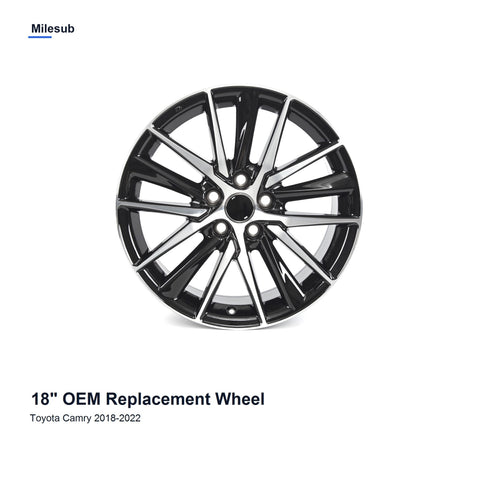
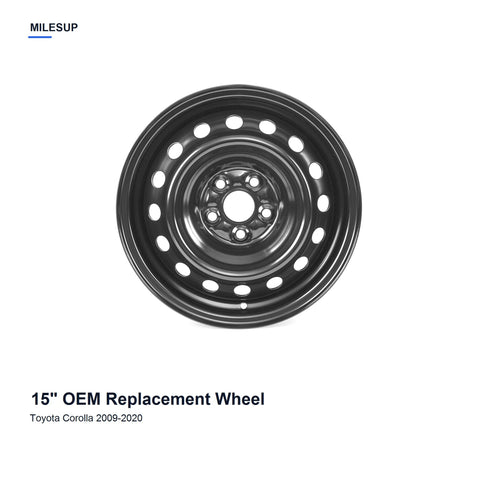
Each wheel below is listed by the year, make and model it was built for. Open one to see the exact vehicles it covers, then check it against your own specs before ordering.

Ready to Find the Right Wheel?
Tell us your year, make, and model, and we will show you wheels built for your vehicle.