
Air loss has four plausible homes: the tire, the valve, the bead area where the tire seals against the wheel, and the wheel itself. Three of those four are usually cheaper and simpler than a wheel. Only an inspection tells you which one you have — and the good news is that the test is quick and inexpensive at any tire shop.
This guide covers what each cause looks like, so you can go in knowing what they're checking and come out with an answer you trust.
What's Actually Happening
Typically one of these:
- The TPMS light comes on every week or two, and the same tire is always low
- You've topped it up three times and it's low again
- A shop said "your rim is leaking" and you're deciding what to do
- The leak started after hitting a pothole or curb — see what to check after a pothole
- The leak started after new tires were mounted
- It only leaks in cold weather, or only after the car sits
Each of those has a slightly different set of likely causes, which is why the details matter.
Where the Air Is Actually Going
The four places air escapes
| Source | What it typically looks like | Notes |
|---|---|---|
| Tire | Puncture, nail, sidewall damage, cracked or aged rubber, porous casing | The most common cause. Often repairable by a tire shop if it's in the tread area. |
| Valve | Leaking valve stem, cracked rubber stem, faulty valve core, corroded TPMS sensor body | Very common, very cheap, and frequently mistaken for a rim leak |
| Bead / sealing area | Leak where the tire meets the wheel rim — often from corrosion buildup, a damaged bead, or a poor seal after mounting | Sits between tire and wheel; a tire shop can often resolve it by cleaning and re-seating |
| Wheel condition | Crack in the rim, bent lip that won't seal, porous casting, corrosion that has eaten through the sealing surface | Real, but less common than the other three |
Two things worth being direct about:
- Air loss alone does not prove the wheel is damaged. A nail in the tread, a failing valve core, and a bead with corrosion buildup all lose air while the wheel itself is perfectly fine.
- A bent lip and a cracked rim are different problems. A bent lip may stop sealing and can sometimes be addressed by a qualified wheel repair facility — but only after an inspection confirms there is no crack. A crack in the wheel is a replacement, and shouldn't be repaired for road use.
Timing clues
- Leak started right after an impact — raises the likelihood of wheel or bead damage
- Leak started right after tire mounting — points at the bead seal or valve service
- Leaks only in cold weather — pressure drops naturally with temperature; confirm it's a real leak, not physics
- Leaks only after sitting for days — consistent with a slow bead or valve seep
- Loses air quickly and visibly — treat as unsafe to drive on until inspected
How to Find the Leak
At home:
- Confirm it's actually leaking. Check pressure cold, note it, re-check in 24 hours and again at three days. Also remember pressure drops roughly with temperature — a cold morning isn't automatically a leak.
- Check the valve. A quick spray of soapy water on the valve stem will bubble visibly if that's the source. This is the cheapest thing to rule out and worth doing first.
- Look for a nail or screw in the tread. Don't pull it out — a shop can usually repair a tread puncture with the object still in place, and pulling it can turn a repairable puncture into a non-repairable one.
- Inspect the sidewall and tread for cuts, bulges, or cracking. A bulging sidewall means don't drive on it.
- Look at the rim edge for visible damage, corrosion, or a flat spot — but understand that many real rim leaks aren't visible from outside.
Anything beyond these five checks — especially a suspected crack, a bent lip, or a wheel that won't hold pressure — should be assessed in person by a qualified automotive professional.
At a shop — the test that actually answers the question:
Ask for a leak-down / submersion test. They'll remove the wheel, inflate it, and either submerge it or spray the tire, bead, valve, and barrel to watch where bubbles form. This directly identifies which of the four sources it is. It's quick, and it's the difference between a $10 valve and a wheel you didn't need.
Also worth asking: - Is the leak at the bead, and if so, is it corrosion or damage? - Is there any crack anywhere on the wheel, including the inner barrel? - If it's the bead, can it be cleaned and re-sealed rather than replaced?
Match the Fix to the Source
Match the fix to the source:
| Confirmed source | Typical path |
|---|---|
| Tire puncture in the tread area | Tire repair (if within repairable guidelines) |
| Tire sidewall damage or aged casing | Tire replacement |
| Valve stem or valve core | Valve service — inexpensive |
| TPMS sensor seal | Sensor service |
| Bead seal from corrosion or debris | Clean, re-seat, re-seal — carried out by a tire shop, not as a DIY fix |
| Bent rim lip that won't seal | Repair vs. replace assessed by a qualified wheel repair professional |
| Cracked wheel | Replacement — do not drive on it |
| Porous or severely corroded wheel | Replacement |
The decision rule: confirm the source, then fix the source. Replacing a wheel because a valve core is leaking is the most common version of getting this wrong.
When replacement genuinely is the answer — a crack, or a wheel that won't seal after cleaning and reseating — Bent Wheel: Repair or Replace? covers the assessment, and how to check wheel fitment determines which replacement is correct. Matching the other three wheels is usually the goal.
If the Wheel Is the Problem, Fitment Decides the Fix
If the wheel is confirmed as the source and replacement is the path:
- Diameter — must match the tire
- Width — must suit the tire
- Bolt pattern — exact match
- Offset — determines wheel position
- Hub bore — proper centering on the hub
For a single-wheel replacement, the goal is a wheel that matches the other three in specification and appearance — which is why fitment comes before shopping (how to find your wheel size).
Before You Order a Replacement
- That the wheel is confirmed as the leak source — not assumed
- Specification match — all five, verified
- Whether it's one wheel or more
- Finish and appearance match — for a single replacement
- Condition — new, OEM-style, reconditioned, or used, stated plainly
- Whether the tire and TPMS sensor transfer, and who handles mounting
- Return terms and support
How Milesub Approaches This
Once a wheel is confirmed as the problem, the goal is a correct replacement rather than a fast one.
- Replace what you need. One leaking wheel doesn't turn into four.
- Keep the factory look. Matches the other three in finish and style.
- Fitment first. Year, make, model — then the five specifications. No guessing whether it seals.
FAQ
Does a leaking tire mean my rim is damaged? No. Tire punctures, valve problems, and bead seal issues are all more common causes than wheel damage. A leak-down test is what identifies the actual source.
How do I know if it's the valve or the rim? Spray soapy water on the valve stem — bubbles there mean the valve. Beyond that, a shop's submersion or leak-down test will find it directly.
Can a bent rim be sealed instead of replaced? Sometimes — but only once a qualified wheel repair facility has inspected the wheel and confirmed it. Minor bends that affect sealing are sometimes repairable, and bead leaks from corrosion can often be cleaned and resealed by a tire shop. A crack is different — that's a replacement.
Is it safe to drive on a tire that keeps losing air? A very slow seep that you're monitoring isn't an emergency, but it's not a long-term plan either — have the tire and wheel inspected by a tire professional, and ask whether the vehicle should be driven in the meantime. Rapid air loss, a bulging sidewall, or a visible crack means don't drive on it.
Why does it only leak when it's cold? Tire pressure drops naturally as temperature drops, so part of what you're seeing may not be a leak at all. Check pressure at consistent temperatures before concluding.
Will a new wheel fix my air loss? Only if the wheel is the source. If it's the tire, valve, or bead, a new wheel won't change anything.
One Wheel or More Than One?
Impact, leak and vibration problems usually start at one corner, so one wheel is often all that is needed. What decides it is whether the other wheels are damaged as well, and whether a single replacement can be matched to the three that stay on the car.
- One wheel — the damage is on one corner and the other three hold air, run true and are not bent.
- More than one — more than one wheel is damaged, or the remaining wheels cannot be matched for diameter, width, bolt pattern, offset and center bore.
How Many Wheels Should I Replace? 1, 2, or All Four covers the count decision in full. Can I Replace Just One Damaged Wheel? covers matching a single wheel to an otherwise healthy set.
Find the Right Replacement Wheel for Your Vehicle
Four steps take you from "something is wrong with my wheel" to a wheel that is listed for your actual vehicle.
- Check your vehicle. Use the year, make and model selector at the top of this page, or send the details through Fitment Check and we will review them before you order.
- Confirm the five specs. Diameter, width, bolt pattern, offset and center bore. How to Check Wheel Fitment shows where each one is measured.
- Read the size off the tire you have now. How to Find Your Wheel Size shows where the size is printed and how to read it.
- Open your make and choose the wheel listed for your model year.
- Toyota Wheels
- Honda Wheels
- Nissan Wheels
- Tesla Wheels
- Hyundai Wheels
- Kia Wheels
- Ford Wheels
- Chevrolet Wheels
- BMW Wheels
- Volkswagen Wheels
- Mercedes-Benz Wheels
- Lexus Wheels
Browse every replacement wheel if you would rather start from the full catalogue.
Replacement Wheels Listed for Your Vehicle
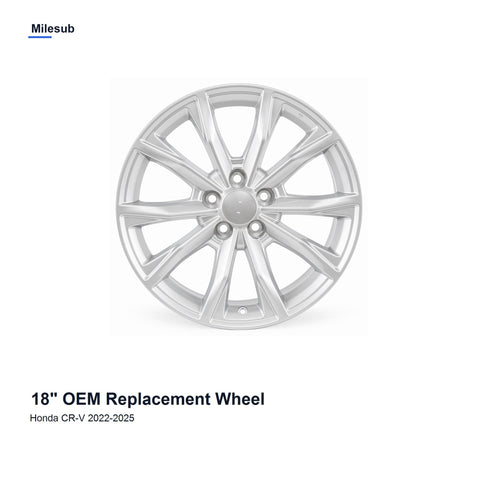
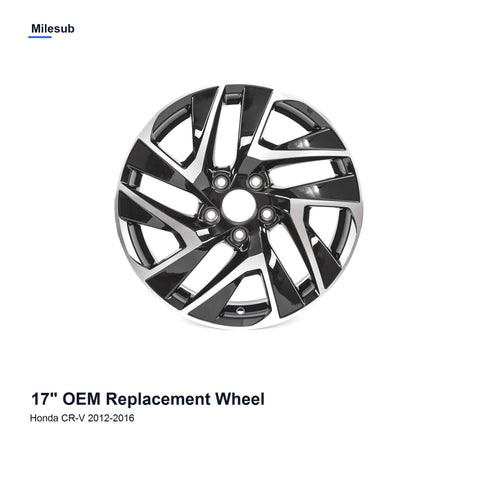
Each wheel below is listed by the year, make and model it was built for. Open one to see the exact vehicles it covers, then check it against your own specs before ordering.

Ready to Find the Right Wheel?
Tell us your year, make, and model, and we will show you wheels built for your vehicle.