
Wheel damage can be one possible cause of vibration. It is not the only one, and a vibration by itself isn't a diagnosis. Tire condition, wheel balance, alignment, suspension components, and a few other things produce symptoms that feel nearly identical from the driver's seat.
What this guide can do is help you describe the symptom accurately, rule out what you reasonably can at home, and understand what a shop is checking so you're not guessing when you get there.
What the Vibration Is Telling You
Vibrations tend to present in patterns, and the pattern is the most useful thing you can bring to a shop:
- Speed-specific: appears around a certain mph and fades above or below it — commonly a balance issue
- Under braking only: often points to brake components rather than the wheel
- Felt in the steering wheel specifically: usually originates at the front
- Felt through the seat or floor: more often rear, or driveline-related
- Started right after an impact: pothole, curb, or collision — raises the likelihood of wheel or suspension damage; what to check after a pothole is the natural next read
- Came on gradually: more consistent with tire wear, balance weight loss, or component wear
None of these is conclusive on its own. They're starting points.
What Could Be Causing It
Here are the conditions that commonly produce a vibration, in roughly the order a shop will think about them:
| Possible cause | Typical pattern | How it's confirmed |
|---|---|---|
| Tire issue — uneven wear, broken belt, flat spot, separated tread | Can appear gradually; sometimes visible on the tread | Visual inspection, tire runout measurement |
| Wheel balance — lost weight, uneven tire/wheel assembly | Speed-specific; often appears and disappears in a narrow band | Spin-balance on a machine |
| Wheel damage — bent rim, out-of-round wheel | Often follows an impact; may come with air loss | Runout measurement with the tire on and off |
| Alignment — usually causes pulling or uneven wear more than shake | Pull to one side, uneven tread wear | Alignment rack measurement |
| Suspension / steering components — worn bushings, ball joints, tie rods, wheel bearing | Often worsens over time; may clunk or change with load | Physical inspection on a lift |
| Brake components — warped or unevenly deposited rotors | Vibration appears specifically when braking | Rotor measurement |
| Driveline — axle, driveshaft, or CV issues | Felt under acceleration or at certain loads | Driveline inspection |
| Other — loose lug nuts, incorrect hardware, wheel not seated | Often follows recent wheel work | Torque check and re-seat |
The key point: several of these produce a shake that feels the same from the driver's seat. That's why "you have a vibration, therefore your wheel is bent" is a bad inference — and why replacing a wheel without isolating the cause can leave you with the same vibration and a lighter wallet.
Safety note: a vibration that appears suddenly, is severe, or comes with a pulling steering wheel, a warning light, or a change in braking behavior warrants prompt professional inspection rather than continued driving.
How to Narrow It Down
Checks you can do at home:
- Look at all four tires. Uneven wear patterns, a bulge in the sidewall, or a tread that looks wavy can be spotted visually. A bulging sidewall means don't drive on it.
- Check tire pressure on all four. A tire that's significantly off can cause and mimic other problems. Use the door-jamb specification, not the tire sidewall number.
- Note exactly when it happens. Speed range, braking or not, steering wheel or seat, loaded or unloaded. Write it down — this is genuinely useful diagnostic information.
- Check that the wheels were recently serviced. If the vibration started right after tire or wheel work, a lost balance weight or a wheel that isn't fully seated is a strong candidate.
What should not be a home diagnosis: - Deciding the wheel is bent because the car shakes - Deciding it's "just balance" and ignoring it for months - Continuing to drive on a tire with visible damage
What a shop will do that you can't: - Spin-balance each wheel and read the actual imbalance - Measure wheel and tire runout — how far out of round things actually are - Inspect suspension and steering components on a lift for wear or damage - Check alignment numbers against specification - Inspect brake rotors if the shake appears under braking
Ask them to tell you which of the causes above they found, not just "it's your wheel."
What Happens After the Diagnosis
The decision follows the diagnosis, never the other way around.
If it's a tire issue → tire repair or replacement, not a wheel. If it's balance → re-balance. Cheapest and most common outcome. If it's a bent wheel → then you're in repair-or-replace territory — see Bent Wheel: Repair or Replace? — and it depends on whether there's a crack and whether it seals and balances. If it's alignment → alignment service. If it's suspension or steering → component repair. This is a safety item and shouldn't be deferred. If it's brakes → rotor service.
Only once a bent wheel is confirmed does a replacement wheel become the answer — and at that point fitment is what determines whether the replacement is correct.
If a Wheel Is the Cause, Fitment Still Matters
If the diagnosis does land on a damaged wheel and replacement is the path, the five specifications decide correctness:
- Diameter
- Width
- Bolt pattern
- Offset
- Hub bore
Hub bore deserves special mention in a vibration article. A wheel whose center bore doesn't properly center on the hub can produce a vibration that looks exactly like a bent wheel — which is a good illustration of why this symptom shouldn't be self-diagnosed. How to check wheel fitment explains all five specifications.
Before You Buy a Replacement Wheel
- That the wheel is actually the problem — confirmed, not assumed
- Specification match — all five, verified to your vehicle
- Which wheel is damaged — front vs rear, and whether more than one
- Finish and appearance match — for a single-wheel replacement
- Condition — new, OEM-style, reconditioned, or used, stated plainly
- Return terms and support
- Whether the tire transfers, and who handles mounting and balancing
Where Milesub Actually Helps
Milesub's role here is narrower than "fix your vibration," and that's on purpose: we sell the wheel, not the diagnosis. Once wheel damage is confirmed and replacement is the answer, the useful thing is getting the right wheel without a second guessing game.
- Replace what you need. One confirmed-damaged wheel doesn't become a set purchase.
- Keep the factory look. Matches the other three, so the repair isn't visible.
- Fitment first. Year, make, and model drive the match — including the hub bore detail that causes vibration-lookalikes.
FAQ
Does a vibrating steering wheel mean my wheel is bent? No. Wheel damage can be one possible cause, but tire condition, wheel balance, alignment, suspension wear, and brake components can all produce the same symptom. It takes an inspection to separate them.
Can I keep driving with a vibration? A mild, long-standing vibration isn't an emergency, but it's not something to ignore indefinitely either — especially if it's worsening, severe, or accompanied by pulling, warning lights, or changes in braking. Have it inspected by a qualified automotive professional, and ask them directly whether the vehicle should be driven before that inspection.
Why does the shake only happen at one speed? Speed-specific vibration is most commonly a balance issue: the wheel and tire assembly has a heavy spot that resonates in a particular speed range. It's also the easiest cause to fix — but confirm rather than assume.
I hit a pothole and now it vibrates. Is the wheel bent? Possibly. Impact damage is a real cause of vibration, but the impact can also knock alignment out or damage a tire or suspension component. Have all of them checked rather than assuming the wheel.
Will a new wheel stop the vibration? Only if the wheel was the cause. If it's balance, tires, alignment, or suspension, a new wheel won't change anything — which is why diagnosis comes first.
Could a wrong wheel cause a vibration that feels like damage? Yes. A wheel that isn't correctly hub-centered, or one with the wrong offset or incorrect hardware, can produce a vibration that mimics a bent wheel. Fitment details matter here more than anywhere else — start with how to find your wheel size.
One Wheel or More Than One?
Impact, leak and vibration problems usually start at one corner, so one wheel is often all that is needed. What decides it is whether the other wheels are damaged as well, and whether a single replacement can be matched to the three that stay on the car.
- One wheel — the damage is on one corner and the other three hold air, run true and are not bent.
- More than one — more than one wheel is damaged, or the remaining wheels cannot be matched for diameter, width, bolt pattern, offset and center bore.
How Many Wheels Should I Replace? 1, 2, or All Four covers the count decision in full. Can I Replace Just One Damaged Wheel? covers matching a single wheel to an otherwise healthy set.
Find the Right Replacement Wheel for Your Vehicle
Four steps take you from "something is wrong with my wheel" to a wheel that is listed for your actual vehicle.
- Check your vehicle. Use the year, make and model selector at the top of this page, or send the details through Fitment Check and we will review them before you order.
- Confirm the five specs. Diameter, width, bolt pattern, offset and center bore. How to Check Wheel Fitment shows where each one is measured.
- Read the size off the tire you have now. How to Find Your Wheel Size shows where the size is printed and how to read it.
- Open your make and choose the wheel listed for your model year.
- Toyota Wheels
- Honda Wheels
- Nissan Wheels
- Tesla Wheels
- Hyundai Wheels
- Kia Wheels
- Ford Wheels
- Chevrolet Wheels
- BMW Wheels
- Volkswagen Wheels
- Mercedes-Benz Wheels
- Lexus Wheels
Browse every replacement wheel if you would rather start from the full catalogue.
Replacement Wheels Listed for Your Vehicle
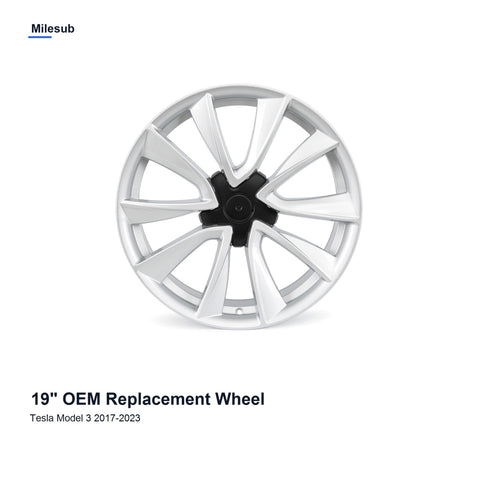
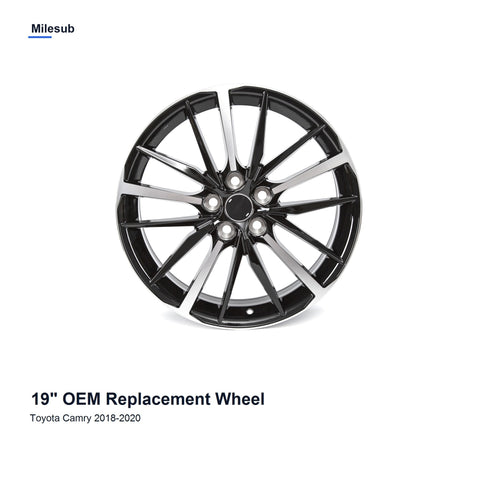
Each wheel below is listed by the year, make and model it was built for. Open one to see the exact vehicles it covers, then check it against your own specs before ordering.
Ready to Find the Right Wheel?
Tell us your year, make, and model, and we will show you wheels built for your vehicle.